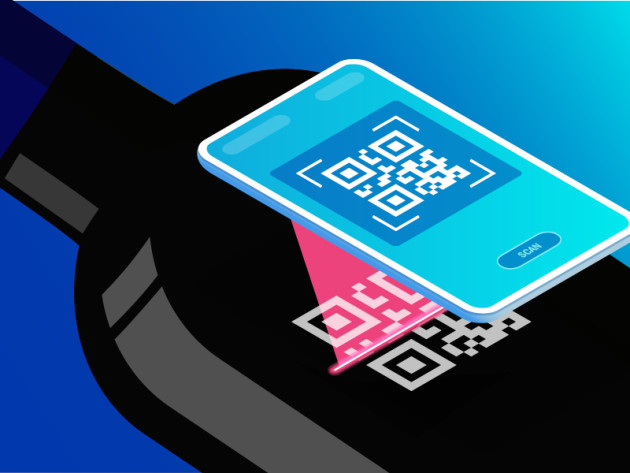
How EU QR codes will hit UK
Jo Gilbert caught up with data standardisation gurus Bootlebooks to dive into the new EU regulations around nutritional labelling for wines and spirits, and how that could impact UK businesses.
The new EU labelling regime has some way to go with finalising details before the deadline on 8 December, but as the date looms, and businesses on both sides of the Channel are still asking questions, here is the story so far.
Late last year, the EU is removing the labelling exception for alcoholic products, which previously meant that wines and spirits did not have to provide full nutritional information and energy values, including calories, like other FMCG categories.
On 8 December, all that is changing. Wine and spirits bottled after that date being sold to the EU will have to include a host of information via a physical back label or QR code. Then, there is the issue of where and how this information will be hosted. One of the major catches of the legislation is that tracking of any kind that requires consent is prohibited. Companies will need to remove any extensive tracking of users such as cookies used for Google Analytics, while any digital footprint linked to the marketing or sale of alcohol will need to be scrapped. As most existing QR codes are linked to producers’ main websites – many of them with ecommerce platforms – entirely new domains will need to be created.
- Read more: The added benefits of functional drinks
Certain pivotal details are still be hashed out, too. What about vintage variation? Will producers need individual labels or codes for each vintage, or will one suffice? Whatever way this particular cookie crumbles, it looks to result in a major digital reshuffle for the supply chain.
“With the legislation as it is now, there are things you must do, things you can do, things that are definitely prohibited and things that are fuzzy,” says Jonathan Harclerode, founder and CEO of Bottlebooks, which specialises in standardising product information for alcoholic drinks.
“One of the things that is fuzzy, but major for wine producers, is the requirement for vintage variation. Until the EU clarifies it, we’re advising one QR code per vintage and per format, especially if we end up with a regime where portion size and portions per bottle is a topic, because once that happens, you can’t even have one QR code for multiple formats. This shouldn’t be taken as legal advice, but what we think is a conservative interpretation of the legislation. It’s better to be safe than sorry.”
Apart from compliance, the other side of these wide-ranging changes is both the incremental step towards the modernisation and moderation of wine consumption inside the EU. By legislating the inclusion for all ingredients and agents on bottles, including stabilisers like citric acid or sulphur, the information needs to be available in every language for every country in which the wine is being marketed. With space on wine labels limited, this effectively means QR codes will become de rigueur, forcing a step-change in supply chain technology.
“All of this emerged from the anti-cancer movement within the EU, which wants people to drink less,” Harclerode told Harpers.
“The optimistic perspective is that it could be the death of the barcode as we know it and a move towards something that is a true identifier of a bottle and has lots of interesting applications. But for better or worse, the EU is doing this to reduce consumption of alcohol. It’s why advertising and links to promotions are banned, and why there can be no ‘buy now’ button.”
↓
Finding the opportunities
Despite concerns around consumer confusion, (will people know what citric acid is or why it’s necessary to the winemaking process?), there are opportunities.
With the advent of QR codes on the horizon, consumers will be able to instantly access details of product information that might appeal to them, such as denomination, variety, production methods, and sustainability and organic certifications, which all fall under the umbrella of what ‘can’ be included. It also has multiple functions across the supply chain, with consumers, tax authorities and suppliers all potentially able to access different tranches of data.
Until now, switching to QR codes across the industry has been cost prohibitive. But with the requirements coming in, vast swathes of businesses are likely to jump from increasingly antiquated barcodes, which only work at in-store checkouts, to multi-faceted QR codes that provide a host of functions.
So far, the legislation applies only to wine being sold in the EU. This will obviously impact anybody producing or bottling in the UK and exporting to the EU or Ireland, as well as business importing via the EU and re-exporting to Ireland.
But looking at the direction of travel, it seems as if it will directly – and swiftly – impact all wines and spirits coming in and out of the UK, with UK legislators not far away from following suit.
“You could jump to the conclusion that within two years, most of the wines in the UK will have nutritional information on them anyway, purely because of economics: producers won’t want to put multiple labels on their bottles if they can find one label that works for both the UK and the EU, so this will essentially piggyback its way into the UK. We initially thought this would be introduced in the UK before the EU, but then that was kicked down the road last year for another 18 months.
“Whatever way you look at it, nutritional information is coming,” Harclerode concludes.
As a result, Bottlebooks is now working with three other software providers to put together best practice for those looking to use third-party providers in their journey to compliance.
Safe E-Label (safe-elabel.org) has been designed to make sure customers can leave with their product and their data, and that the legislation doesn’t cause a ‘land-grab’ for information.
For now, one of the biggest problems for businesses is timelines and printing packaging. Many are having to make quick decisions in order to get abreast of the new rules; and this is no easy feat, as legislation and technology continue to evolve.
Keywords:
Search


56-58 Church Walk, Burgess Hill, West Sussex, RH15 9AN
Registered in England No. 6646125. VAT No. 938 4452 95